Showing posts with label clothing. Show all posts

Thursday, 1 December 2011

Snake Skin Scarf Knitting Pattern

Snake Skin Scarf Knitting Pattern

Knit yourself a cute snake scarf to wrap around your neck to keep you warm this winter. The snake scarf is great fun, and has a wiggly cable detail down his back. Knitted with chunky wool, makes this scarf a quick knit and an ideal quick present to knit for someone.

To knit the Snake scarf you will need...

200g or more of Wendy Pampas Mega Chunky wool in any colour you want your snake to be,
6mm knitting needles,
Cable needle,
20mm sew on wobbly eyes and some red satin ribbon for his tongue.

The knitting pattern for the snake skin scarf can be bought here...

Sunday, 13 November 2011

Woolly Hat Knitting Pattern to Match Michelle Szeghalmi's Evangeline Fingerless Gloves

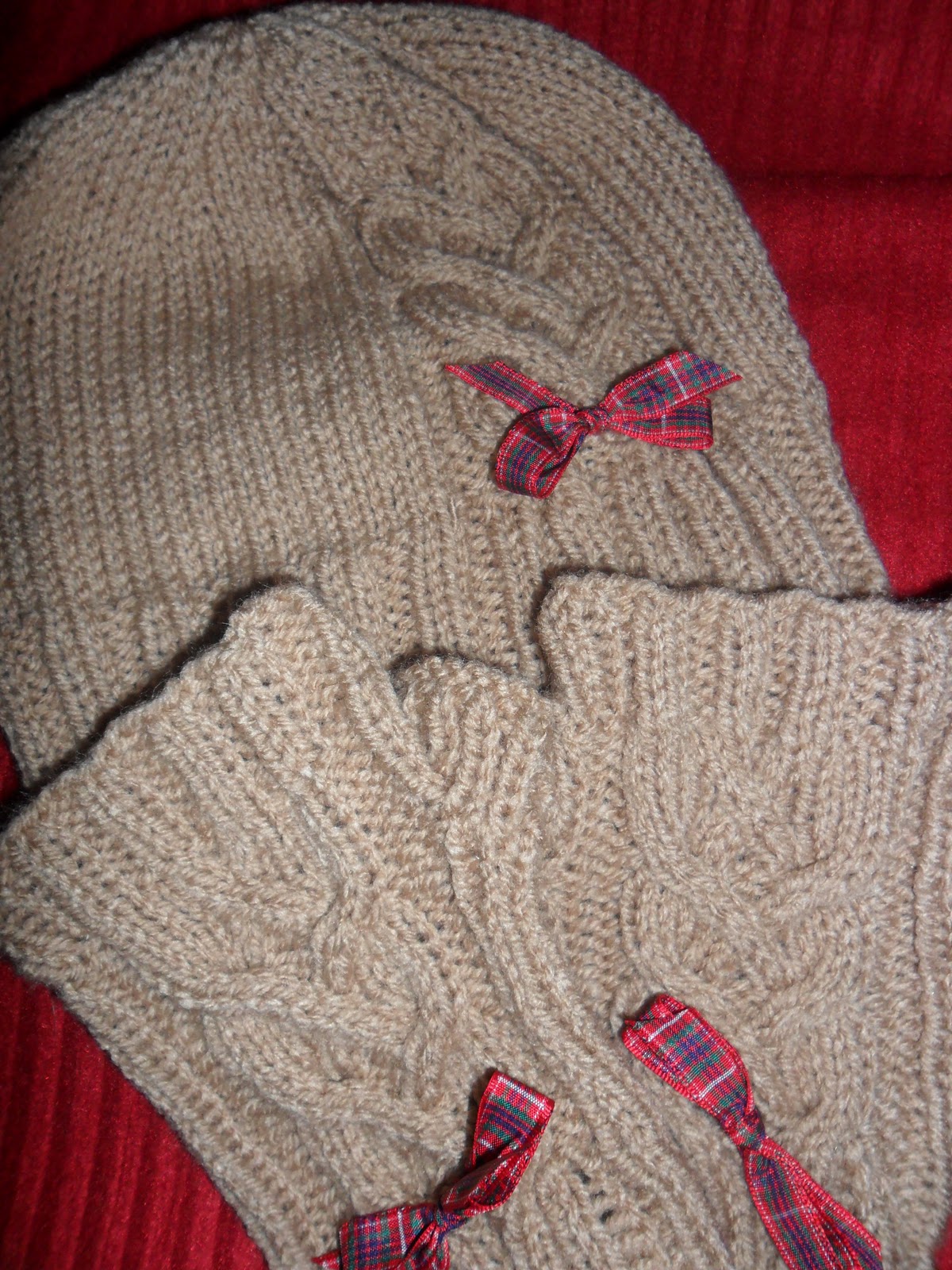
Woolly Hat Knitting PatternI recently knitted a pair of Evangeline fingerless gloves designed by Michelle Szeghalmi. I found the gloves pattern free online. I had knitted a pair of elbow length gloves about a year ago for my daughter, and now I wanted to knit the short pair as a Christmas present for Nanna, but I also wanted to knit a hat to match. So here is the hat I knitted, incorporating the same pattern panel as in the gloves by Michelle Szeghalmi.

With the same wool as used for the gloves and on size UK number 7 needles cast on 88 stitches and work 14 rows double rib

*K2, P2* rep to end.

Then Knit 24, P2, work first row of Evangeline cable pattern, P2, Knit to end

Alternate rows, knit the knits and purl the purls.

Work three sets of the Evangeline pattern (32 rows in all) and then keeping the pattern as true as possible shape the top as follows.

Row 1: *K6, K2tog* to end

All alternate rows are purl.

Row 3: *K5, K2tog* to end
Row 5: *K4, K2tog* to end
Row 7: *K3, K2tog* to end
Row 9: *K2, K2tog* to end
Row 11: *K1, K2tog* to end
Row 13: *K2tog* to end
Row 15: *K6, K2tog* to end

Thread the yarn through the remaining stitches and draw up and finish off. Sew down the back seam of the hat with fight sides facing.

Finally I threaded a small length of ribbon through the knitting at the bottom, centre of the first pattern row and tied a bow.


Wednesday, 12 October 2011

LadyBug Slippers Knitting Pattern

LadyBug Slippers Knitting Pattern
I always give my children a silly Christmas present every year just as a bit of fun, and this year I have knitted my 20 year old daughter a pair of LadyBug Slippers.

I found a free knitting pattern online you can download the PDF here...

The pattern says that you need fleece yarn, but because it's just a silly Christmas gift I didn't want to go to that expense, and I just used two strands of double knitting yarn. I knitted the 'adult medium slipper' working to the sizes in brackets and my slipper has turned out to be 22cm in length, but as the pattern says the slipper does stretch. I have size 7 feet and they fit me fine.

Ladybird Slippers Knitting Pattern


Another alteration I made was to the spots, instead of sewing some spots on my ladybirds, I knitted them some.

Using size UK 8 kneedles and single strand of black double knitting wool cast on 12 st and knit a row.
Row 2: K2 tog to end then cut the yarn and thread it through the remaining stitches. sew the knitted row ends together so that it makes a circle. I made 5 spots for each slipper.

I also made the ladybird some eyes. I thought that plastic eyes wouldn't be very comfortable on your feet, and besides I wanted to keep the cost to a minimum and I have lots of oddments of knitting wool.

With size UK 8 Knitting needles and white double knitting yarn cast on 20 stitches and knit 1 row.
Row 2: P2 Tog to end then cut the yarn and thread it through the remaining stitches. sew the knitted row ends together so that it makes a circle.

Pupils

With size UK 8 Knitting needles and black double knitting yarn cast on 12 stitches.
Row 2: K2 Tog to end then cut the yarn and thread it through the remaining stitches. sew the knitted row ends together so that it makes a circle. Sew the pupil in place on top of the white of eye.

To make antennae I cast on 16 stitches, and knitted 1 row quite tightly and then cast off. The knitted strip has a natural curve to it. Go with that curve and toll the one end of the antennae to make a small ball on the end. Tack into place and then sew the other end of the antennae on to the slipper.


Thursday, 24 May 2007

Indulge Your Inner Hippie and Learn to Tie Dye

by Chris Robertson

Even if you're not a child of the 60s, you've probably had the pleasure of owning and wearing tie dye clothing. If you've ever been to an event with a craft fair, chances are that you've noticed those eye-catching booths full of colorful tie-dye clothing and home decor. You may even have marveled at how they manage to incorporate those intricate, vibrant designs onto a plain cotton T-shirt.

While intricate tie dying is truly an art, you and your family can have loads of fun at home making your own tie dye (or tye dye) creations. Hands down, the best way to learn how to tie-dye is through instructions demonstrated on a video or DVD. Seeing how it's done, as opposed to reading about it, makes all the difference in the world. Still, tie dye is a process of trial and error, so why not give it a whirl (or a swirl)?

It's All About the Fabric

When it comes to tie dye, the right fabric is critical. Natural fibers - like cotton or linen, pick up the dye well. If you stick with 100 percent cotton, you can't go wrong. To start with, why not pick up some inexpensive T-shirts at your local mass merchandiser? Get one for each family member, and make it a party! Remember, though, that you need to wash and dry the new garments before you start your tie dying party. Unwashed new fabric won't pick up the dye very well.

The Secret of Dyes

Actually, the dyes you use to tie-dye aren't a big secret. For cotton, you need to use a dye that will react well to the fabric, namely Procion MX, dissolved in a urea solution. You can make virtually every color imaginable with just three colors: yellow, turquoise, and fuchsia. But, before you start dying, you need to soak your fabric in soda ash. Tie dye artisans use a few other chemicals as well, which you can learn about on an instructional DVD or video.

The Fun Part: Patterns

Tie-dye is all about colors and patterns. Learning how to make swirls, crinkles, stripes, wavy lines, hearts, clovers, and - yes - even peace signs is a great way to engage the creativity of everyone in the family. You can learn to tye knots; twist fabric into pancake shapes secured by rubber bands; roll a shirts to form tubes, which you then tie; and pleat the fabric to make symmetrical patterns.

Applying the Dye

There are at least six different techniques you can use to apply the dye to your fabric, from dipping and soaking to using squeeze bottles and spray bottles. Again, someone with years of experience can best teach you how to apply dyes to get the results you want.

Making it Stick

After tie dying your shirts or decor, it's important to follow the steps necessary to make sure the dye reacts with the fiber. Then you need to repeatedly wash the fabric in a special solution so that the dyes don't inadvertently mix and so the garments remain colorfast.

Ultimately, though, tie dye is all about having fun. It can be a family adventure, a fun way to spend a weekend afternoon with friends, or a way to indulge the creative hippie within you. A great instructional DVD or video will help you learn to tie dye, and send you well on your way to creating gorgeous, vibrant designs.

Chris Robertson is an author of Majon International, one of the worlds MOST popular internet marketing companies.
For tips/information, click here: Tie Dye
Visit Majon's Crafts and Hobbies directory.